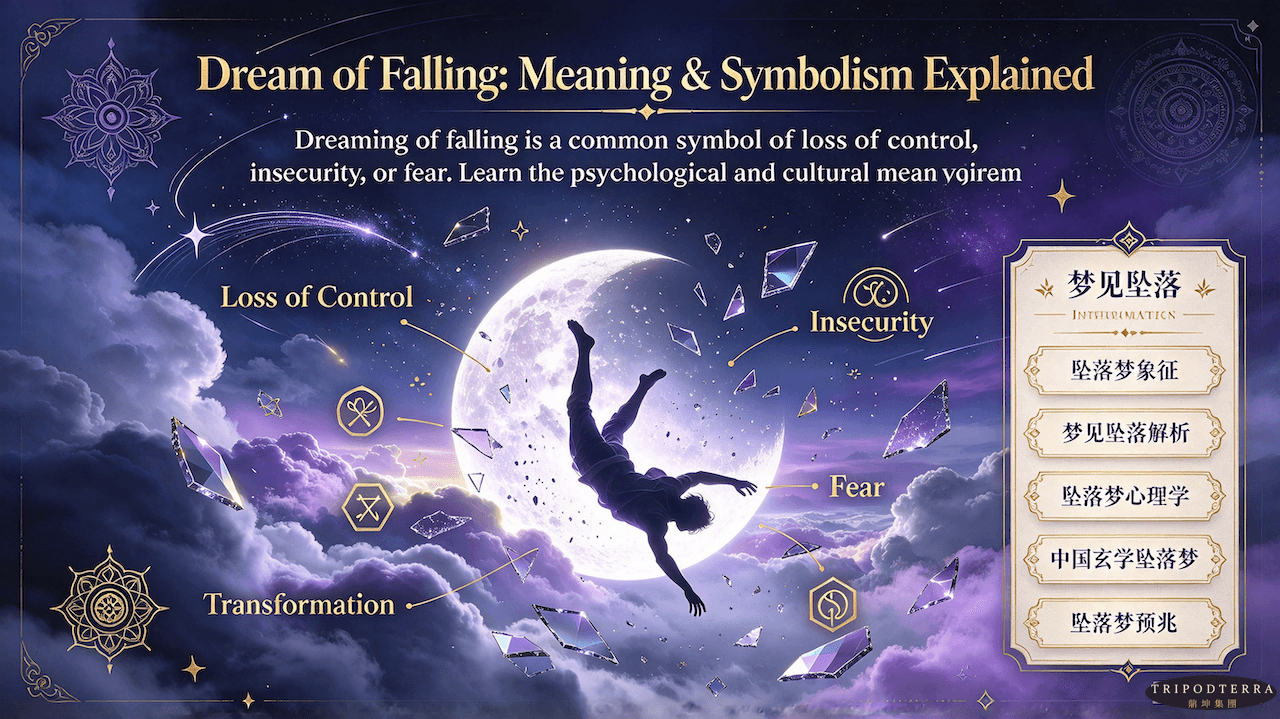
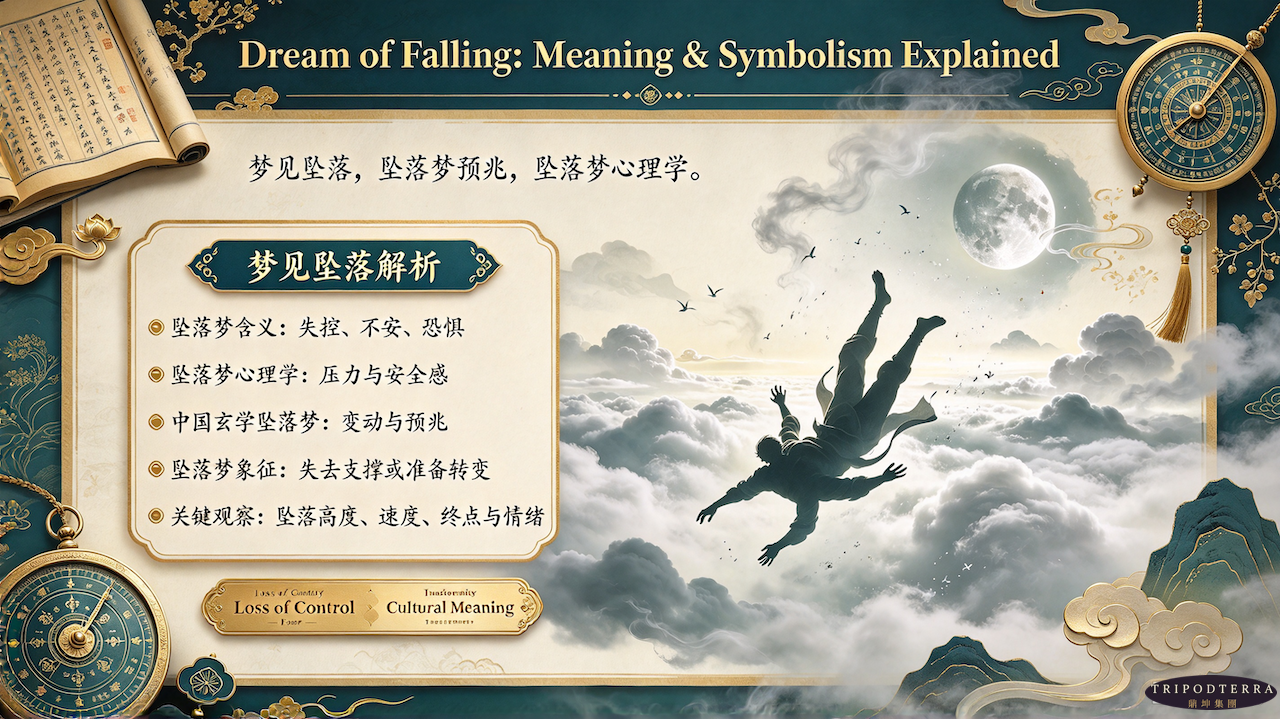
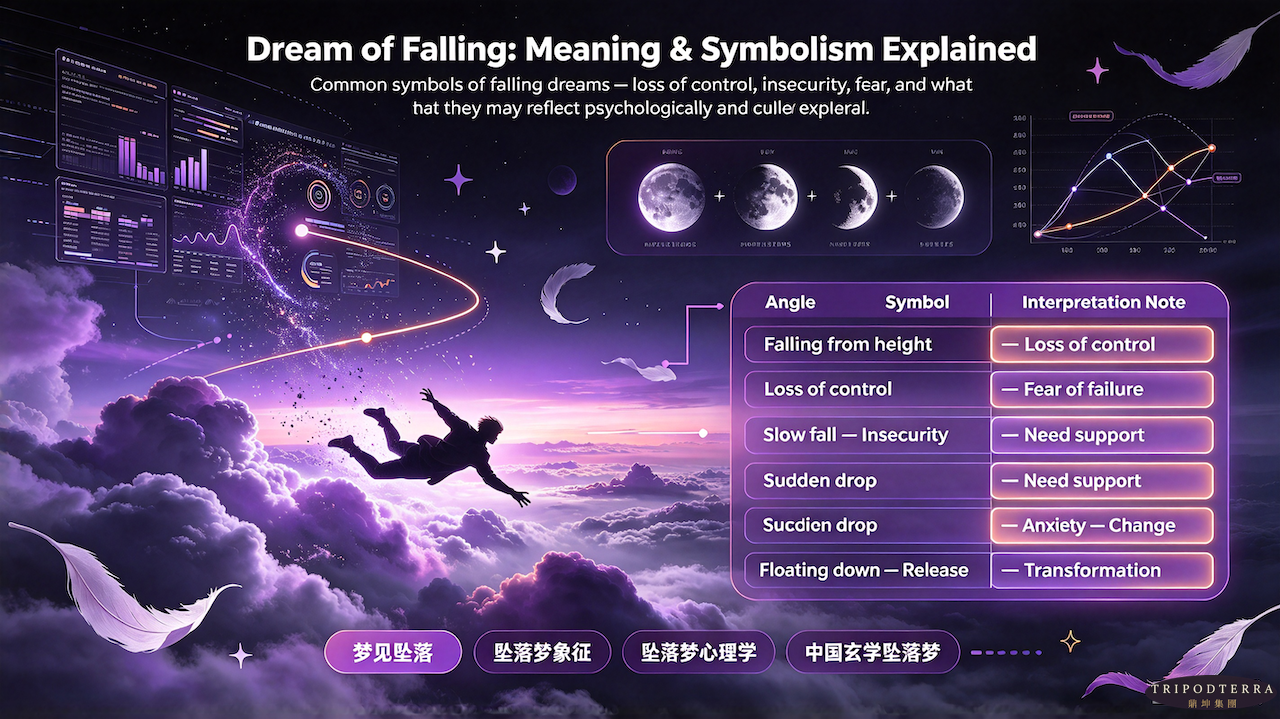
Dreaming of falling is one of the most common and vivid dream experiences. It often jolts you awake with a sense of sudden loss of control. But what does it really mean? In this article, we explore the psychological, cultural, and symbolic interpretations of falling dreams, drawing from both modern dream research and traditional Chinese metaphysics.
2. Psychological Perspectives on Falling Dreams
2.1. Loss of Control
Falling in dreams frequently reflects a waking-life situation where you feel powerless or overwhelmed. You might be facing a job change, relationship issues, or financial uncertainty. The sensation of falling mirrors the lack of solid ground beneath you.
2.2. Insecurity and Anxiety
Anxiety about the future or fear of failure can manifest as falling. Your subconscious may be processing worries about not meeting expectations—whether your own or others'.
2.3. Letting Go
Sometimes, falling dreams are not negative. They can symbolize release, surrender, or the need to let go of something you cannot control. This is common during periods of transition.
2.4. Physiological Triggers
Hypnic jerks—involuntary muscle twitches as you fall asleep—can also cause the sensation of falling. In such cases, the dream is a physical response rather than a symbolic one.
Share
Daily Fortune Newsletter
One daily BaZi reading, straight to your inbox. Free, unsubscribe anytime.
In Chinese culture, dreams are often seen as omens or reflections of one's energy (qi). Falling dreams may indicate an imbalance in your life or a need to ground yourself. The direction of the fall—into water, from a height, or into darkness—adds nuance.
3.1.1. Falling into Water
Water often symbolizes emotions. Falling into water may suggest emotional overwhelm or a need to confront feelings you have been avoiding.
3.1.2. Falling from a Height
This can represent a fear of losing status, reputation, or security. It may also indicate that you have set unrealistic goals.
3.1.3. Falling into Darkness
Darkness symbolizes the unknown. Such dreams may arise when you are facing uncertainty or fear of the future.
3.2. Western Folklore
In Western traditions, falling dreams were sometimes thought to be warnings of danger or illness. However, modern psychology views them as internal, not external, warnings.
4. Common Scenarios and Their Meanings
4.1. Falling and Waking Up with a Jerk
This is often a hypnic jerk. It is harmless and usually occurs during light sleep. If it happens frequently, consider reducing caffeine or stress before bed.
4.2. Falling Repeatedly in One Night
Recurring falling dreams may indicate persistent anxiety or unresolved issues. It might be helpful to journal about your worries and seek support if needed.
4.3. Falling and Landing Safely
If you land safely, it can symbolize resilience and the ability to overcome challenges. You may be subconsciously reassuring yourself that you can handle what comes.
4.4. Falling with Someone Else
Falling with a partner or friend may reflect shared concerns or relationship dynamics. It could indicate that you are both going through a similar phase.
5. How to Respond to Falling Dreams
5.1. Grounding Techniques
Upon waking, take a few deep breaths and focus on your body. Feel your feet on the floor. This can help dispel the lingering sense of unease.
5.2. Journaling
Write down the dream and any associated feelings. Look for patterns. Are you more likely to have falling dreams during stressful periods?
5.3. Address Waking-Life Stress
If falling dreams are frequent, examine areas of your life where you feel out of control. Taking small, actionable steps can reduce anxiety.
5.4. Relaxation Before Bed
Practice relaxation techniques such as meditation, gentle yoga, or reading. Avoid screens and heavy meals before sleep.
6. Falling Dreams in Chinese Zodiac and BaZi
In BaZi (Four Pillars of Destiny), each individual has a unique energy map. Falling dreams might be more common when certain elements are unbalanced. For example, a weak Earth element could manifest as feeling ungrounded. Consulting a BaZi practitioner might offer personalized insights, but remember that this is for reference only and not a substitute for professional advice.
7. Conclusion
Dreaming of falling is a universal human experience. It often reflects a need for stability, control, or emotional release. By understanding the symbolism and addressing underlying stress, you can turn these dreams into opportunities for self-awareness. Remember, dreams are personal—what matters most is what they mean to you.
Disclaimer: This article is for informational purposes only and does not constitute medical or psychological advice. If you are experiencing persistent anxiety or sleep disturbances, please consult a qualified professional.
Dream of Falling: Meaning & Symbolism — TripodTerra